KATHMANDU, Nepal: Nepal’s domestic aviation sector is once again under intense scrutiny following a runway overrun involving Buddha Air, the country’s largest private airline, an incident that has revived long standing concerns over passenger safety, regulatory oversight, and infrastructure readiness in one of the world’s most challenging flying environments.
On the night of January 2, 2026, Buddha Air Flight 901, an ATR 72 aircraft operating from Kathmandu to Bhadrapur, skidded off the runway while landing at Bhadrapur Airport in Jhapa district. The aircraft, carrying 51 passengers, four crew members and one engineer, departed Kathmandu at 8:23 pm and overran the eastern end of the runway by nearly 300 metres at around 9:08 pm, coming to a halt on grassy ground beyond the paved surface.
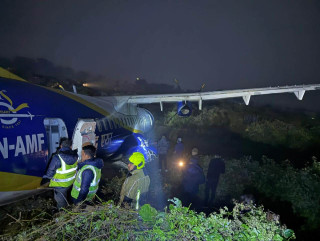 Six Discharged After Buddha Air ATR 72 Runway Overrun at Bhadrapur, Co Pilot Under TreatmentSeven people, including six passengers and the co pilot, sustained injuries. While six were discharged after primary treatment, the co pilot, 24 year old Sushant Shrestha of Lalitpur, suffered head and facial injuries and remains under medical care at Om Sai Pathibhara Hospital in Bhadrapur. All occupants were evacuated safely following a swift response by Nepal Police, the Nepali Army, airport authorities and officials from the Civil Aviation Authority of Nepal.
Although no fatalities were reported, the incident has unsettled travellers and aviation professionals alike, particularly as it follows a pattern of operational disruptions involving the airline. The runway excursion temporarily disrupted operations at Bhadrapur Airport, underscoring persistent concerns about the condition and capacity of Nepal’s regional airports.
Buddha Air Flight Skids Off Runway at Bhadrapur, All 55 Onboard Safe
This was not the first such incident involving Buddha Air. In July 2024, another ATR 72 aircraft skidded off the runway while landing at Gautam Buddha International Airport in Bhairahawa. Earlier, in 2025, a Buddha Air ATR experienced a technical malfunction involving a landing gear wheel, forcing an unscheduled return to Kathmandu. While these incidents did not result in loss of life, each placed passengers in potentially high risk situations.
For many frequent domestic travellers, these events reinforce broader frustrations. Passengers routinely complain of prolonged delays, sometimes stretching four hours or more, lack of timely information inside aircraft cabins, missed onward connections, and operational uncertainty, particularly during adverse weather. Some travellers have also raised concerns over pricing practices and inconsistent customer handling during disruptions.
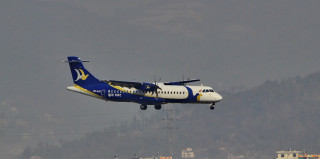 Emergency Landing at TIA After Buddha Air Flight Reports Engine Trouble
Nepal’s aviation sector has a troubled safety record, with more than 68 reported aviation incidents since 1955, including 44 fatal accidents. Industry experts point to a combination of factors such as challenging terrain, unpredictable weather, congested airspace, ageing infrastructure and weak regulatory enforcement. Runway excursions, controlled flight into terrain and maintenance lapses remain recurring risks across domestic operations.
Buddha Air, for its part, has sought to reassure the public. Following the Bhadrapur incident, the airline issued a statement expressing concern, thanking emergency responders and confirming full cooperation with the CAAN investigation. A technical team was dispatched to assess the aircraft, and the airline reiterated its emphasis on maintenance standards, crew training and safety audits. Buddha Air often highlights its A2 plus safety rating and claims to have carried more than 22 million passengers safely over its operational history.
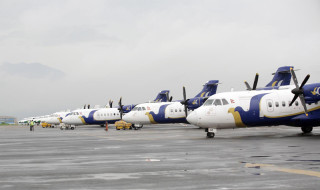 BUDDHA AIR CONVERTS SAFETY FINES INTO CHARITABLE GIFTS
Regulators, however, continue to face criticism. While CAAN says it monitors risks through the Nepal Aviation Safety Plan, government reviews and aviation analysts have repeatedly questioned the authority’s enforcement capacity and oversight effectiveness. Calls for structural reforms, stricter audits and investment in airport infrastructure have grown louder after each near miss.
The Bhadrapur runway overrun has become more than an isolated incident. For many in Nepal’s aviation community, it stands as another warning sign in a sector where margins for error are slim and the cost of complacency can be catastrophic. As investigations continue, passengers and professionals alike are demanding clearer accountability and tangible action to ensure that safety commitments translate into safer skies.









From Facebook